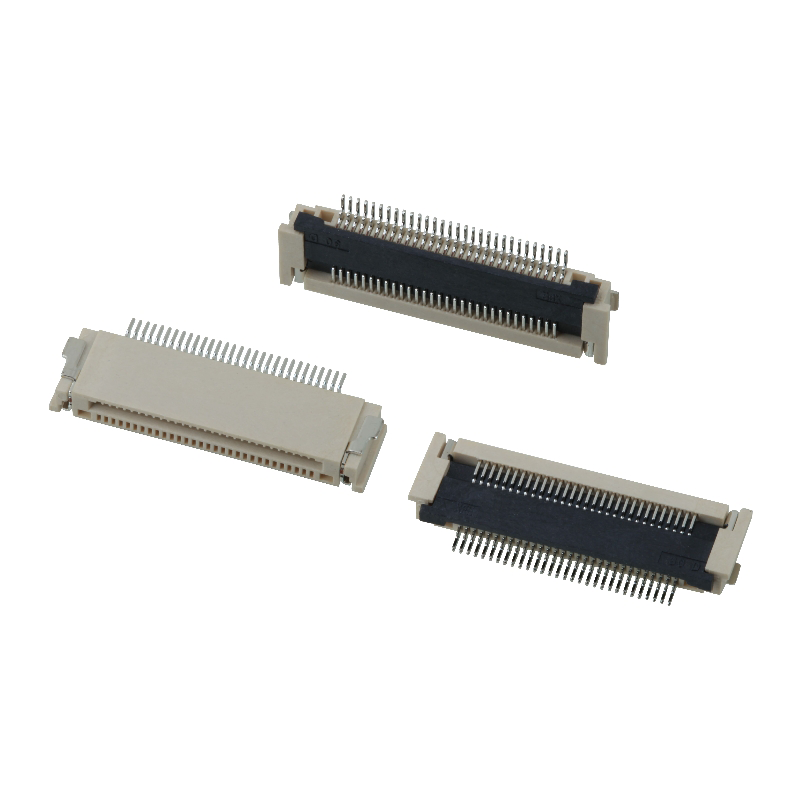
The installation of FPC (Flexible Printed Circuit) connectors requires meticulous operation to ensure stable electrical connections and long-term reliable mechanical performance. Firstly, before installation, confirm that the FPC connector matches the specifications of the FPC and ensure that the conductor part is clean and undamaged. The environment should be kept dry and dust-free to avoid dust or foreign objects affecting the quality of the connection.
The common types of FPC connectors include ZIF (zero insertion force), UIF (low insertion force), and soldering type, with slightly different installation methods. When installing the ZIF connector, first use tweezers or fingers to gently open the latch to make it in an open state; The UIF connector can be directly inserted without the need to open the latch. When inserting the FPC, ensure that the conductor part is aligned with the connector slot and inserted slowly and evenly, avoiding tilting or excessive force to prevent damage to the contacts or poor contact.
For ZIF connectors, after inserting the FPC, the lock buckle needs to be closed to ensure that the FPC is firmly clamped; UIF connectors rely on automatic fixation after insertion, while soldered FPC connectors require soldering to be fixed with the solder pads aligned. After installation, gently pull the FPC to ensure it does not loosen or fall off, and confirm that the latch is fully closed.
Finally, conduct electrical function testing to ensure normal signal transmission and correct installation of connectors. For applications in high vibration or special environments, fixed fixtures or glue can be used to reinforce the FPC, enhancing its stability and anti-interference ability. By following these precise installation steps, the lifespan of FPC connectors and the performance of equipment can be effectively improved.