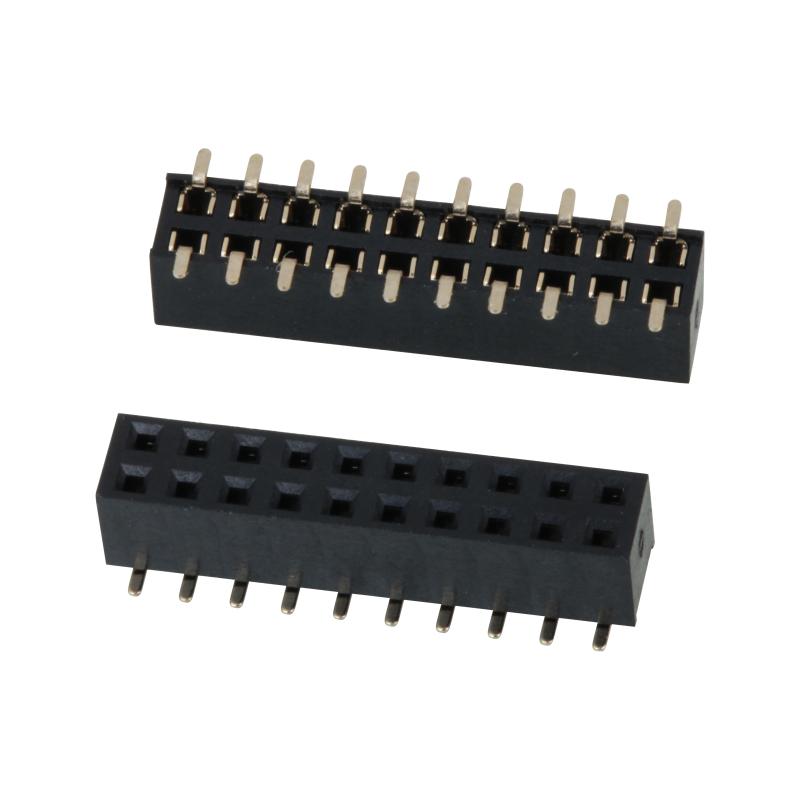
The precise adjustment of the height of pin header and female header pairing is a key step in ensuring the smooth operation of mechanical equipment. Firstly, ensure that the equipment has been shut down and powered off, clean the pin headers and female headers and their installation areas, and avoid dust or debris interfering with the adjustment process. Check if the pin and nut are installed correctly, ensuring they are securely and symmetrically fixed to avoid looseness or offset.
Next, use precision measuring tools such as micrometers or digital height gauges to measure the initial height difference between the pin and nut. Usually, the top of the female header should be slightly higher than the pin header to ensure that the female header can push the pin header, and the height difference between the two should generally be between 0.1 mm to 0.2 mm. If the height of the busbar is too low, its position can be raised by adjusting the screws of the busbar seat or adding washers; If the pin header height is not suitable, the pin header holder can be fine tuned or the adjustment screw of the pin header can be adjusted.
After the adjustment is completed, measure the height difference between the pin header and female header again to ensure that their mating height meets the standard and that they can fit smoothly. It is possible to conduct a no-load test to observe whether the pin header and female header rows are stable and free of jamming. If the test goes smoothly, it indicates that the adjustment was successful.
Finally, to ensure long-term stable operation of the equipment, regularly check the pairing height of the pin header and female header, especially after frequent use or long-term operation of the equipment, which may cause wear or looseness. Regular inspection and fine-tuning can ensure that the equipment is always in the best condition, extend its service life, and improve production efficiency.